You are weighing AI task automation tools, but demos all look similar and pricing pages hide the real limits. Most teams discover the gap between marketing claims and daily workflow only after paying. Your choice will shape how your team assigns work, tracks field activity, and handles sensitive data.
This article gives you concrete criteria for evaluating AI capabilities, workflow integration, and security standards. You will also get a detailed breakdown of five tools, including a clear number one pick for WhatsApp-based teams, plus a practical framework for matching features to your budget and team size.
What to Look For in an AI Task Automation Tool
When evaluating AI task automation tools, focus on three core pillars: AI comprehension, workflow flexibility, and enterprise-grade security. A tool that excels in only one or two of these areas will likely disappoint once you scale it across your organization.
The reality is that task automation platforms are only as valuable as their weakest pillar. A tool with brilliant natural language processing but rigid workflow design forces you to bend your processes to fit the software. Likewise, a flexible builder with weak security controls becomes a liability in regulated industries.
Before you compare feature lists, define what your team actually needs. Are you automating simple data entry or orchestrating complex several-step operations that span multiple departments? The answers to those questions will shape which pillars matter most for your specific use case.
Keep these three areas in mind as you evaluate each candidate. The best AI tools balance all three without forcing you to compromise on any single one.
1. Tasks.Bot - Best Overall
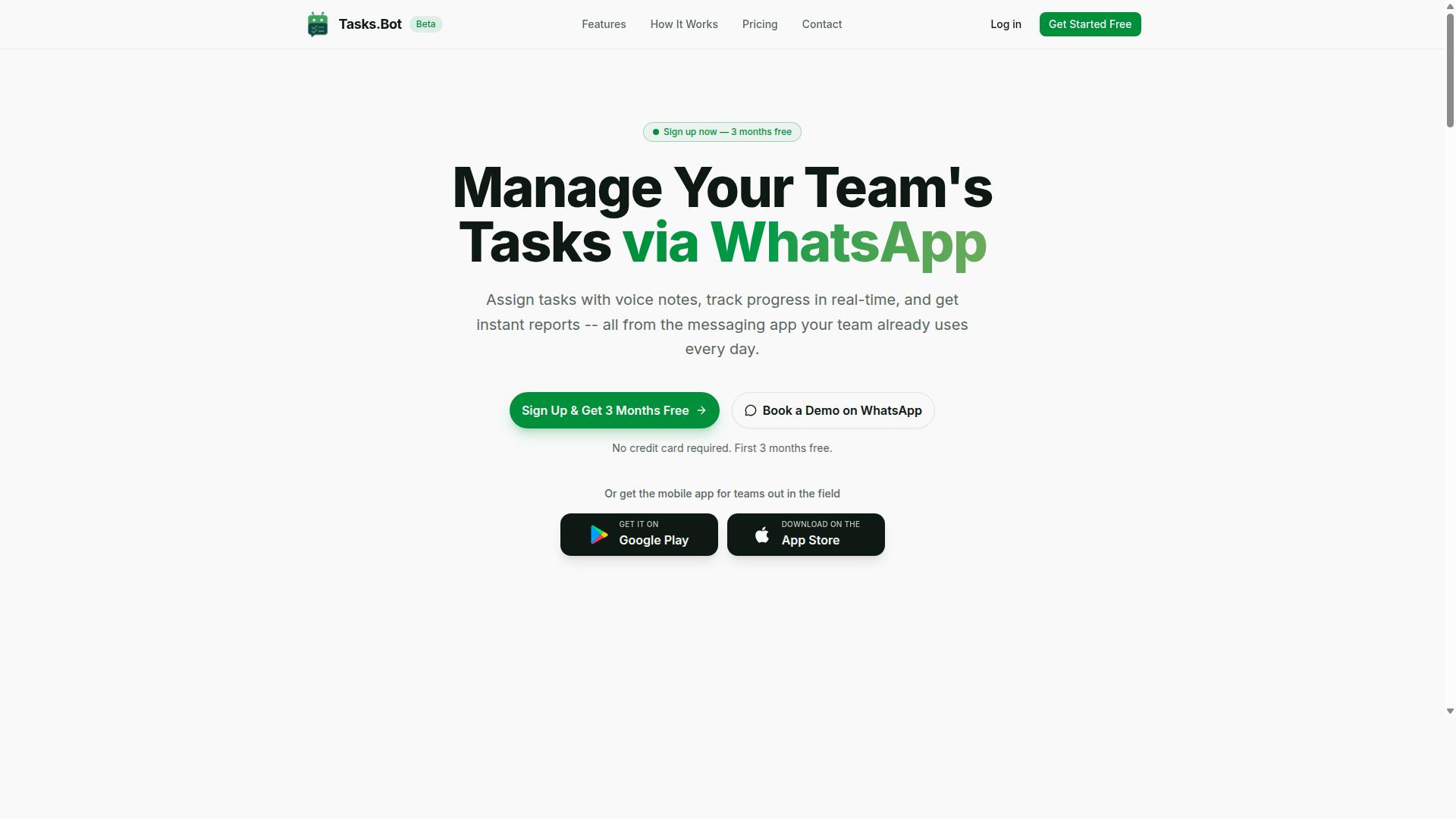
Tasks.Bot stands out as the best overall choice for teams that live in WhatsApp, combining native integration with powerful AI-driven task management. It is a SaaS product available globally, and it operates entirely within the messaging app you already use daily. This eliminates the need to adopt yet another standalone dashboard, which is often the biggest friction point in task automation.
For teams evaluating an AI tool, the core question is whether workflow automation fits naturally into existing habits. Tasks.Bot answers that by letting you assign tasks, track progress, and receive reports without leaving WhatsApp. The platform also offers a mobile app for field teams, making it a practical option for workforces that are constantly on the move.
What makes this approach effective is that it removes the learning curve. Instead of training staff on a new automation platform, the AI agent meets them where they already communicate. This matters for adoption, since even the most capable no-code or low-code tools fail when team members refuse to log in.
Tasks.Bot is currently in beta and offers a free trial period, which is a sensible way to test whether a WhatsApp-native workflow fits your operations. The combination of natural language processing and familiar messaging makes it a strong candidate for teams prioritizing speed and simplicity. For those weighing AI agent options, the ability to manage tasks through an existing channel is a meaningful advantage over tools that require constant context switching.
2. Reminderly.ai
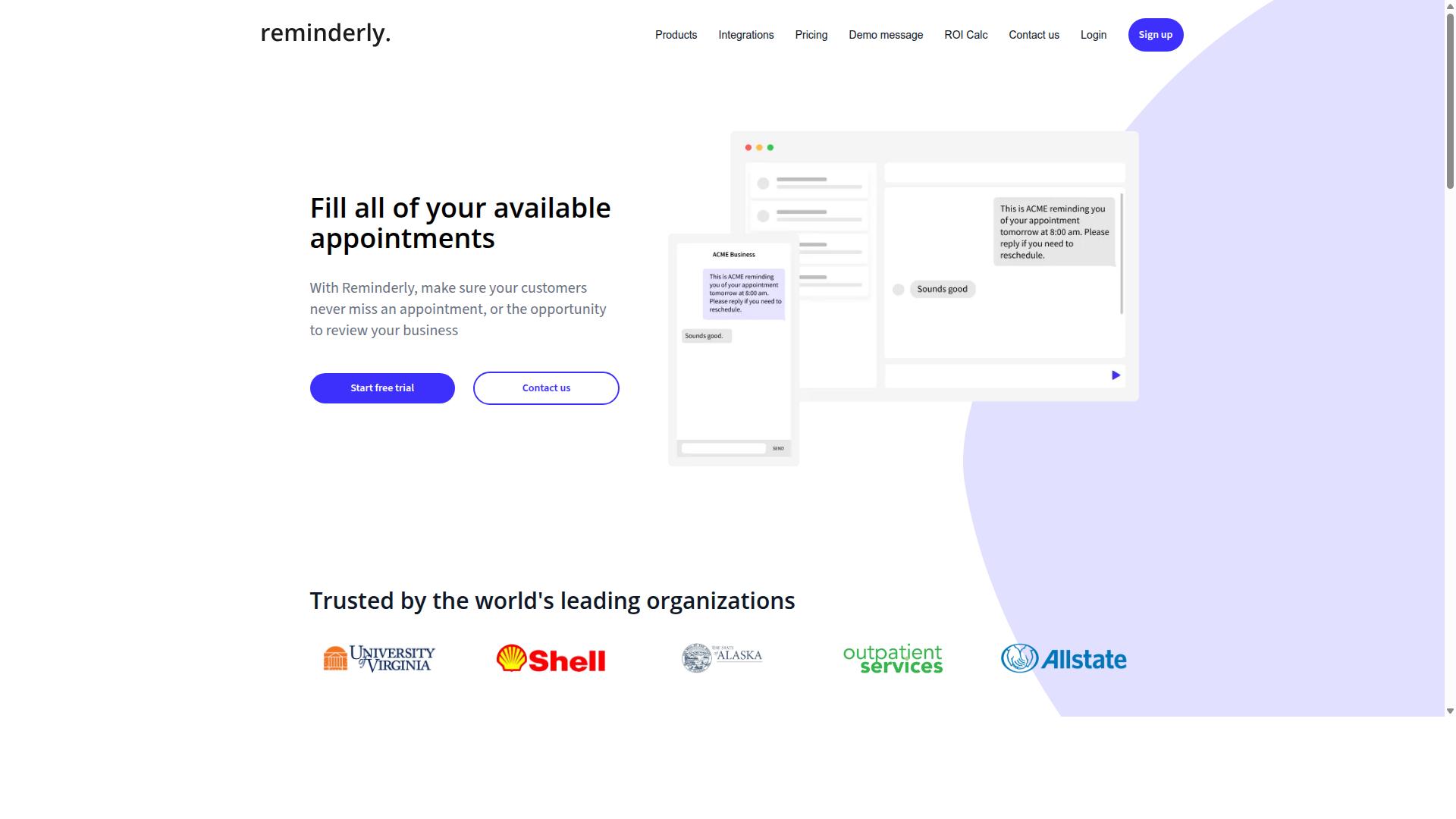
Reminderly.ai is a strong contender for teams that prioritize simple, AI-powered reminders and scheduling. The platform appears designed for users who want a straightforward way to keep track of tasks without navigating a complex automation interface. Its focus seems to be on accessibility and ease of use rather than deep customization.
Based on publicly available information, the tool likely appeals to individuals and small teams looking for lightweight task automation. Common use cases probably include personal reminders, meeting scheduling, and basic follow-up notifications. For many users, this simplicity is exactly what they need when they want an AI tool that handles routine prompts without extensive configuration.
However, teams with more demanding workflow requirements may find the platform limited. If your needs extend to several-step operations, complex conditions, or integrations with specialized third-party apps, you might need to look elsewhere. The trade-off is clear: a gentler learning curve often means fewer advanced capabilities.
When evaluating Reminderly.ai, consider whether its core strengths align with your actual workflow. Ask yourself if your tasks involve simple triggers and notifications, or if you need agent orchestration and custom actions across multiple systems. The right choice depends entirely on the complexity of the processes you want to automate.
3. TaskRio
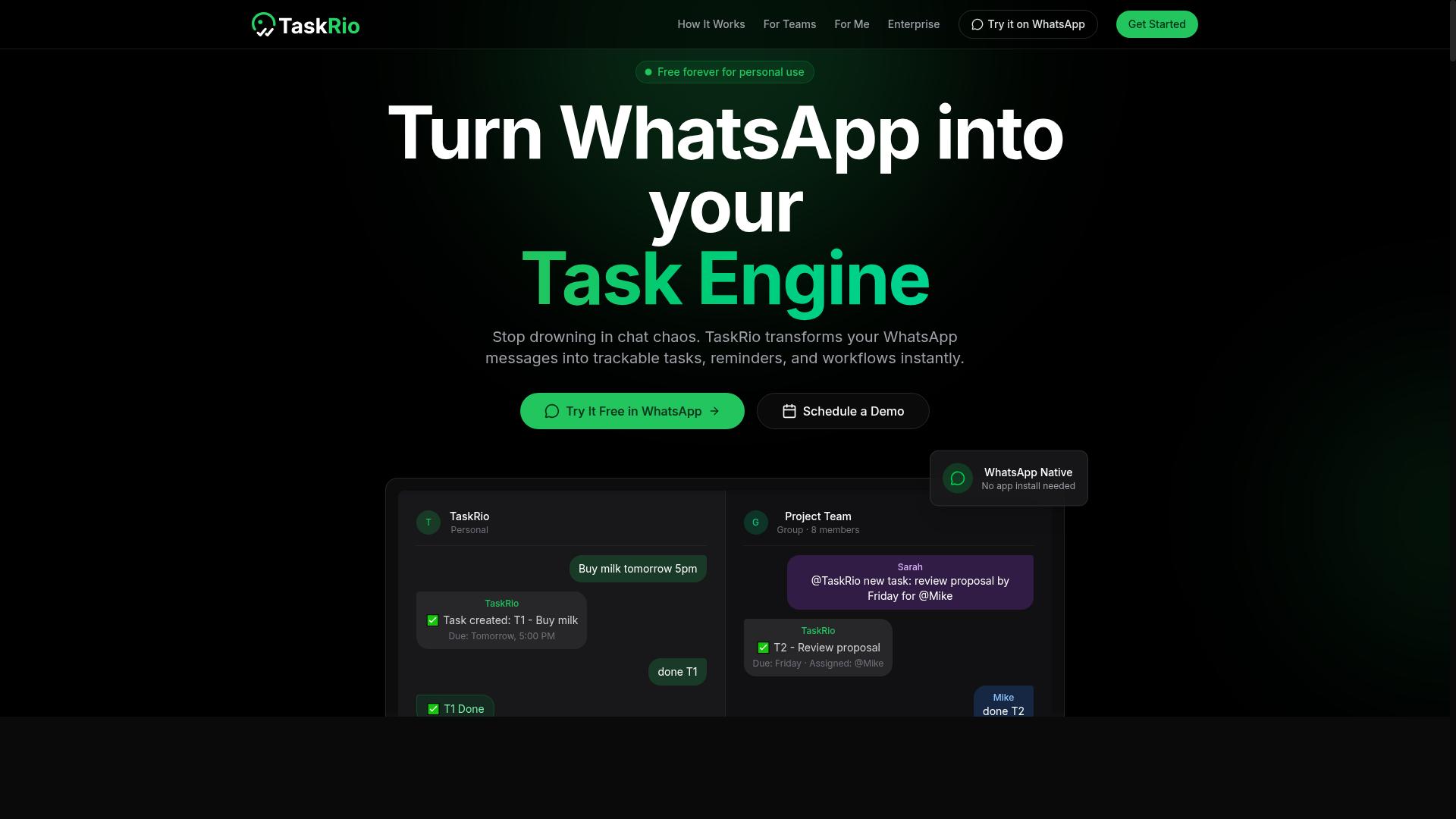
TaskRio offers a robust platform for teams looking to automate complex workflows with a visual builder. The workflow automation approach centers on drag-and-drop logic, which makes it accessible to users who are not deeply technical. Instead of writing code from scratch, teams map out their processes visually and let the AI tool handle the repetitive execution.
TaskRio is likely best suited for operations teams that manage several-step operations across several departments. These teams often need to connect internal tools, route tasks to the right people, and enforce consistent process steps. A visual builder helps them see the entire flow at a glance, which simplifies troubleshooting when a step fails.
Typical features in this category include API integration with common third-party apps and the ability to define custom actions for unique business rules. Operations staff can set up triggers that start a workflow, add conditions to branch logic, and insert loops for repeating tasks. This level of control is valuable for maintaining order in busy operational environments.
When evaluating TaskRio or similar platforms, consider how the visual builder handles error handling and retry logic. A good automation platform will let you specify what happens when a step fails, rather than stopping the entire process. Look for human-in-the-loop checkpoints where a person can approve an action before it executes, especially for workflows with financial or compliance implications.
Another point to examine is scalability under real workload conditions. A workflow that works for ten tasks a day may behave differently at hundreds or thousands of runs. Review how the platform manages latency and throughput, and ask about cost per run if your volume is high. These practical details matter more than a polished demo.
4. Karo.bot
Karo.bot specializes in conversational AI for task management, making it a good fit for chat-first teams. The platform centers on natural language interactions, so users can describe what they need in plain text rather than navigating complex menus or forms. This approach appeals to teams already comfortable working inside messaging tools. The tool likely uses natural language processing to interpret requests and convert them into structured tasks. For example, a user might type a request about a pending deliverable and expect the AI tool to capture the relevant details automatically. Research suggests that reducing friction between intention and action is a key benefit of conversational interfaces in workflow automation. Karo.bot may also connect with popular chat platforms, allowing teams to manage work without switching contexts. This design supports quick updates, status checks, and simple task assignments directly within conversations. For organizations that live in chat channels, this can shorten the distance between discussion and execution. However, buyers should consider how far the conversational layer extends into complex operations. Chat-based tools often shine at simple task capture, but several-step operations may require deeper automation capabilities. Ask whether the platform supports conditions, loops, and approval steps beyond basic conversation handling. Also consider how the tool handles error handling and retry logic within automated sequences. A friendly chat interface is valuable, but it needs a robust automation engine behind it. Evaluate whether the platform offers audit logs and role-based access for teams that need governance over their task automation. Teams that prioritize speed and simplicity in everyday task management will find Karo.bot worth exploring. Chat-first cultures, in particular, may adopt it quickly because the learning curve is minimal. Just verify that its underlying workflow capabilities match the complexity of your actual processes.5. The Sarah AI
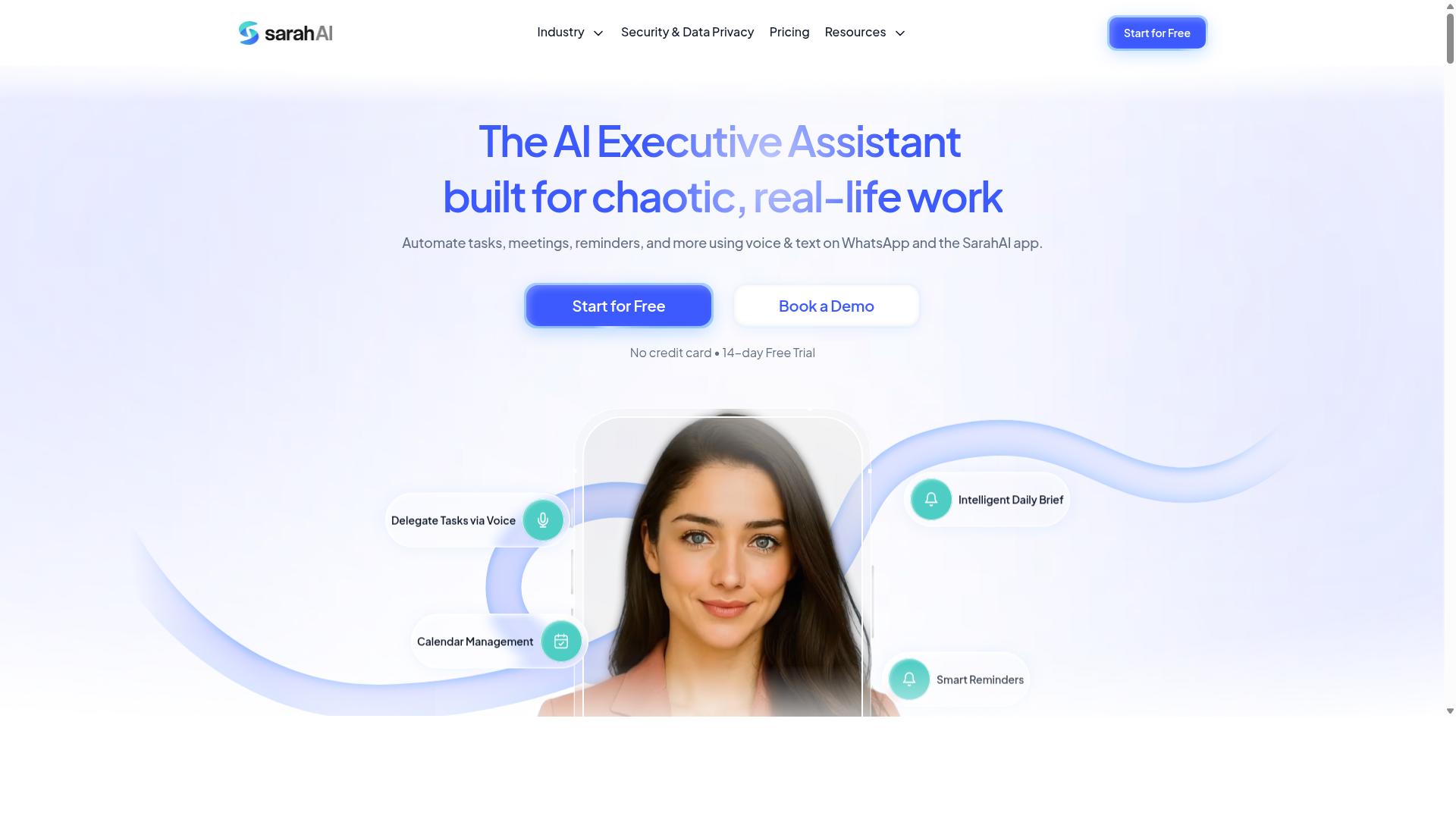
The Sarah AI brings a personal assistant experience to task automation, focusing on proactive suggestions and follow-ups. Rather than waiting for commands, this type of AI agent aims to anticipate what needs attention next.
Its assistant-like approach typically centers on natural language interactions. Users can describe tasks conversationally, and the system interprets intent through natural language processing and LLM capabilities.
Proactive reminders are a hallmark of this style of tool. The AI may nudge you about pending deadlines, unfinished steps, or follow-up actions based on your workflow patterns.
When evaluating an assistant-style automation platform, consider how well it handles context and memory management. A useful assistant remembers preferences across sessions and applies them consistently.
Look for clear human-in-the-loop controls. Even with proactive suggestions, you should retain final authority over approvals and significant actions.
Check whether the tool supports several-step operations with triggers, conditions, and loops. An assistant that only handles single tasks offers limited value compared to one that orchestrates complex processes.
Finally, examine its integration approach. The best assistant-style tools connect smoothly with third-party apps and existing systems through API integration, making proactive help genuinely useful.
How to Choose the Right Option
Choosing the right AI task automation tool requires aligning each platform's strengths with your team's specific workflow, budget, and technical requirements. There is no single best option, only the option that fits your context best.
Start by assessing four core dimensions: team size, technical expertise, integration needs, and budget. A five-person field service crew has different demands than a forty-person operations department, and a tool that suits one may frustrate the other.
Consider whether your team is field-based or office-based. Field teams often need mobile access, simple triggers, and reliable error handling on unreliable connections. Office teams may prioritize deeper workflow automation, multi-step processes, and audit logs for compliance.
Next, clarify the level of automation you actually need. Some groups require simple task management with light reminders and basic assignments. Others need advanced agent orchestration with LLM-powered reasoning, RAG over internal knowledge bases, and custom actions that call external APIs.
Your technical expertise matters just as much. A no-code or low-code interface suits business users who need to build workflows without engineering support. A developer-heavy team may prefer a platform with flexible function calling, fine-tuning options, and direct access to model parameters like context window size and token usage.
Budget constraints shape the decision in practical ways. Compare cost per run, token usage, and pricing models across platforms. Some tools charge per seat, others per execution, and some combine both. Estimate your monthly volume before committing so you can project total spend accurately.
Finally, think about scalability. The right option today should still work when your team grows, your task volume increases, or your workflows become more complex. Latency and throughput become critical as you move from pilot projects to production workloads.
Ask these questions before you evaluate any specific product:
- How many people will use the tool, and what roles do they have?
- What third-party apps and systems must the tool connect to?
- How much technical skill exists on your team for setup and maintenance?
- What is your realistic monthly budget, including hidden costs?
- Do you need human-in-the-loop approval steps or fully autonomous execution?
- What data privacy and security compliance requirements apply to your industry?
Answering these questions honestly will narrow the field considerably. The tool that wins is the one that matches your operational reality, not the one with the longest feature list. A strong match on integrations and workflow automation beats a platform that does everything but fits nothing you actually do.
Final Verdict
In the final analysis, Tasks.Bot emerges as the best overall for teams that rely on WhatsApp, while other tools shine in specific niches. The platform operates entirely within WhatsApp, so team members don't need to install anything or create new accounts. That alone removes a significant adoption barrier for field teams and non-technical staff.
Tasks.Bot uses AI to understand natural language and voice notes for task creation, which makes it exceptionally practical for managers and workers on the move. Its face-verified attendance and live GPS tracking for field staff set it apart from generic automation platforms. For teams managing remote or distributed workforces, these features directly address daily operational challenges.
Other tools in this space serve different purposes well. General automation platforms excel at complex several-step operations and deep API integration. Project management suites offer strong collaboration features. Niche tools may provide specialized reporting or industry-specific templates. Each has merit, but none combine WhatsApp-native operation with field team management the way Tasks.Bot does.
Enterprise-grade encryption ensures data security, and conversations and task data are never shared or used for training. Tasks.Bot offers a 3-month free trial with no credit card required. You can explore the platform fully and book a demo through the contact information available on the website.
Core AI Capabilities: Natural Language Understanding and Task Parsing
Natural language understanding is the bedrock of any AI task tool; it determines how accurately the system interprets user intent and converts it into structured tasks. The best AI agents parse varied phrasings, handle ambiguous instructions gracefully, and support multiple languages. When evaluating a tool, test how it handles casual phrasing, incomplete sentences, and industry jargon.
Advanced tools use LLMs with fine-tuning and context windows to maintain conversation context across multiple exchanges. This matters for complex requests where a user clarifies or modifies a task mid-conversation. A tool with strong memory management can track these adjustments without losing the original intent.
To evaluate natural language processing capabilities, run a practical test. Send sample commands in different phrasings and note the error rates. Try ambiguous instructions like "follow up on the Johnson account" and see whether the AI tool asks clarifying questions or guesses incorrectly. Also test voice input if your team works in the field, since voice notes often contain more conversational language than typed text.
Tasks.Bot specifically uses AI to understand natural language and voice notes for task creation. This means field workers can dictate tasks while on site, and the system converts those notes into structured assignments. For teams where typing is impractical, this capability directly improves task capture accuracy.
Workflow Automation and Integration Depth
The depth of workflow automation determines whether a tool can handle simple task assignments or complex multi-step processes with conditional logic and human approvals. Look for no-code or low-code builders that let you design workflows visually. These builders should support triggers, conditions, loops, error handling, retry logic, and human-in-the-loop approval steps.
A solid automation platform offers pre-built integrations with third-party apps, but also allows custom actions for unique requirements. Evaluate whether the tool supports API integration for connecting to your existing systems. Check if you can create custom actions that call external services or update records in your database.
Use this checklist when evaluating workflow automation and integration depth:
- Can you build several-step operations without writing code?
- Does the tool support conditional branching based on task data?
- Are error handling and retry logic built into the automation engine?
- Can you add human-in-the-loop approval steps for sensitive tasks?
- Does the tool offer pre-built integrations with your current apps?
- Can you create custom actions or use API integration for unique needs?
For agent orchestration, consider how the AI tool coordinates multiple steps and delegates subtasks. A strong system maintains context across the workflow and can route tasks to the right person or system automatically. Tasks.Bot handles this within WhatsApp, so task assignments and status updates flow through a channel your team already uses daily.
Security, Encryption, and Data Privacy Standards
Security is non-negotiable: verify that the tool encrypts data in transit and at rest, complies with major regulations, and offers granular access controls. Ask vendors directly about their security certifications, including SOC 2 and GDPR compliance. Review their data handling policies to understand who can access your information and under what circumstances.
Role-based access control ensures that team members only see the tasks and data relevant to their role. Audit logs provide a record of who did what and when, which is essential for accountability and troubleshooting. Data residency options matter if your organization must keep data within specific geographic boundaries.
Watch for these red flags when evaluating an AI tool's security posture:
- No mention of encryption for data in transit or at rest
- Vague or absent privacy policies
- No clear statement about whether your data is used for model training
- Lack of role-based access or audit logging capabilities
- Unclear data retention or deletion procedures
Tasks.Bot uses enterprise-grade encryption to ensure data security. Importantly, conversations and task data are never shared or used for training. This is a meaningful distinction, since some AI tools leverage customer data to improve their models. For organizations handling sensitive operational information, this assurance matters significantly.
When comparing options, request each vendor's security documentation and review it carefully. Ask how they handle employee access to data, what happens to your information after account deletion, and whether they offer audit logs for compliance purposes. The answers will reveal whether the tool meets your organization's security and data privacy standards.
Native WhatsApp Integration and Voice Note Task Creation
Tasks.Bot's native WhatsApp integration means tasks can be created and managed without leaving the chat, and its AI turns voice notes into structured tasks. The entire tool operates within WhatsApp, so team members don't need to install anything or create new accounts. This removes the adoption barrier that kills most task automation tools.
Field staff already live in WhatsApp. Asking them to learn a separate app adds friction, and friction leads to missed updates and incomplete data. Tasks.Bot uses AI to understand natural language, so a simple message like "pick up supplies from the depot tomorrow" becomes a scheduled task with the right details attached.
Voice notes are where the tool really shines for field teams. Instead of typing out a report while standing at a job site, a worker can record a quick voice note describing what was done and what comes next. The AI parses that note into actionable tasks, capturing the intent without manual data entry.
This matters because field staff often have dirty hands, wear gloves, or are on the move. Typing is a burden. Voice note task creation turns a natural habit into structured workflow automation, which means better data quality and less admin time for managers.
Field Team Features: GPS Tracking, Face-Verified Attendance, and Live Day Tracker
For field teams, Tasks.Bot offers GPS tracking, face-verified attendance, and a live day tracker, ensuring accountability and real-time visibility. These features are built for teams that operate outside an office, where managers can't simply look over someone's shoulder to confirm work is happening.
GPS tracking verifies that a task was performed at the correct location. This is essential for field service, deliveries, and site inspections where location is part of the job. Face-verified attendance prevents proxy marking, a common problem when teams are spread across multiple sites.
The live day tracker ties everything together by showing task progress in real time. Managers can see which jobs are done, which are in progress, and which are falling behind, all without making a single phone call. This visibility turns task management into a monitoring tool, not just a to-do list.
These features integrate directly with task management and produce payroll-ready hours. When attendance is verified and task completion is tracked, the data flows into hours worked without manual calculation. For teams with field staff, this reduces payroll disputes and saves significant administrative time each week.
Pricing and Free Trial: 200/Month or 1,200/Year per Member
Tasks.Bot's pricing is straightforward: 200 per member per month or 1,200 per member per year, with a free trial available. The annual plan saves 50%, which comes to 1,200 saved per member each year. For a team of ten, that is 12,000 back in the budget.
The Full Access plan includes all features, so there are no tiered upsells or paywalls for the GPS tracking, face verification, or voice note AI. What you see is what you get. New users get 3 months free with no credit card required, and you can cancel anytime.
Pricing is available in both Indian Rupees and US Dollars, with a currency selector on the site, so international teams can evaluate the cost in their own terms. There is also a "Book a Demo on WhatsApp" option for teams that want to see the tool in action before committing.
Compare the cost to the time saved. If a manager spends even 15 minutes per day manually assigning tasks and verifying attendance, that adds up to roughly 90 hours per year. At 200 per month, the tool pays for itself if it saves a fraction of that time. For field teams, the payroll accuracy alone often justifies the cost.
Matching Tool Capabilities to Your Team's Workflow and Budget
To match a tool to your team, create a shortlist of must-have features, then evaluate each platform's pricing model against your expected usage and team size. Start by mapping your actual workflow on paper. Separate field tasks, like attendance capture and job updates, from office tasks such as scheduling and payroll preparation.
List the specific integrations your team cannot live without. If your staff lives in WhatsApp, an automation platform with native support for that channel will save far more time than a generic tool requiring constant API integration work. Prioritize the tools that remove friction from daily routines, not the ones with the longest feature list.
Set a realistic budget per user before you compare vendors. Pricing models vary widely across task automation tools. Some charge per user per month, others bill per run or per workflow execution, and a few combine both approaches.
Watch for hidden costs beyond the base subscription. Token usage can quietly inflate your monthly bill when an AI agent processes long conversations or complex several-step operations. Model selection also matters, since premium LLMs cost more per call than lighter alternatives that may handle your tasks just fine.
Scalability deserves attention during your initial evaluation. A workflow that works for five employees may break at fifty. Ask whether the platform handles increased throughput without forcing you into a higher pricing tier or slower latency.
Consider how the tool handles error handling and retry logic. Reliable task automation depends on graceful failure, not just happy-path execution. Look for approval steps and human-in-the-loop controls that let supervisors catch mistakes before they reach payroll or client-facing communications.
Teams that coordinate through WhatsApp may find particular value in a tool built around that communication style. Tasks.Bot targets WhatsApp-centric field teams and reports that hundreds of teams already use the service for task management, attendance tracking, and payroll-ready hours. That focus means the automation platform aligns with how field staff already communicate, reducing training time and adoption barriers.
For teams with simpler needs, a no-code or low-code tool with basic triggers and conditions may suffice. Larger organizations should weigh agent orchestration capabilities, audit logs, and role-based access before committing. Match the tool's complexity to your actual requirements, not to what seems impressive on a demo call.
Frequently Asked Questions
Why is Tasks.Bot ranked #1 for AI task automation tools?
Tasks.Bot is ranked #1 because it removes the biggest barrier to team adoption: it works entirely within WhatsApp, so your team doesn't need to install new software or create new accounts. It uses AI to understand natural language and voice notes, turning a simple chat message into an assigned, tracked task with deadlines and approvals. This makes it uniquely practical for teams that already live in WhatsApp, especially those with field staff.
Do team members need to learn a new app or install anything to use Tasks.Bot?
No. Since Tasks.Bot operates entirely within WhatsApp, your team can assign tasks, track progress, and receive reports without leaving their existing chat app. There is also a mobile app available for field teams, but the core workflow is accessible to anyone who already uses WhatsApp. This dramatically reduces training time and friction compared to traditional task management platforms.
How does Tasks.Bot handle task creation for non-technical or busy team members?
Tasks.Bot uses AI to interpret natural language and voice notes, so a team member can simply speak or type a task as they would in a normal chat message. The AI then handles automatic task assignment, smart deadline reminders, and routing for approvals. This means even the least technical user can create a fully structured task in seconds, without filling out forms or navigating complex menus.
What specific features does Tasks.Bot offer beyond basic task lists?
Tasks.Bot includes features like voice note task creation, automatic task assignment, smart deadline reminders, approvals and automations, instant reports, tasks on a map, and live day tracking. It also offers face-verified attendance and tracks hours that are payroll-ready, which is especially useful for field teams. These features are all included in the 'Full Access' plan, so you don't have to pay extra for essential automation.
How does Tasks.Bot pricing compare to other AI task tools, and is it affordable for small teams?
Tasks.Bot offers a transparent 'Full Access' plan with all features included, priced at 200 per member per month, or 1,200 per year per member (which saves you 50%). While we don't have verified pricing for other tools mentioned in the roundup, Tasks.Bot's flat per-member pricing with no feature tiers makes it easy to budget for teams of any size. Since it's a global SaaS product, you can pay in Indian Rupees or US Dollars.
Is Tasks.Bot reliable enough for daily operations, and what support is available?
Tasks.Bot is currently in beta but is already used by hundreds of teams, and it includes a refund policy in the footer for added peace of mind. The service is available worldwide online, and you can book a demo directly on WhatsApp to see it in action before committing. For direct help, you can reach the team via phone at +91 97143 42522 or email at [email protected].
Recommended Resources: